
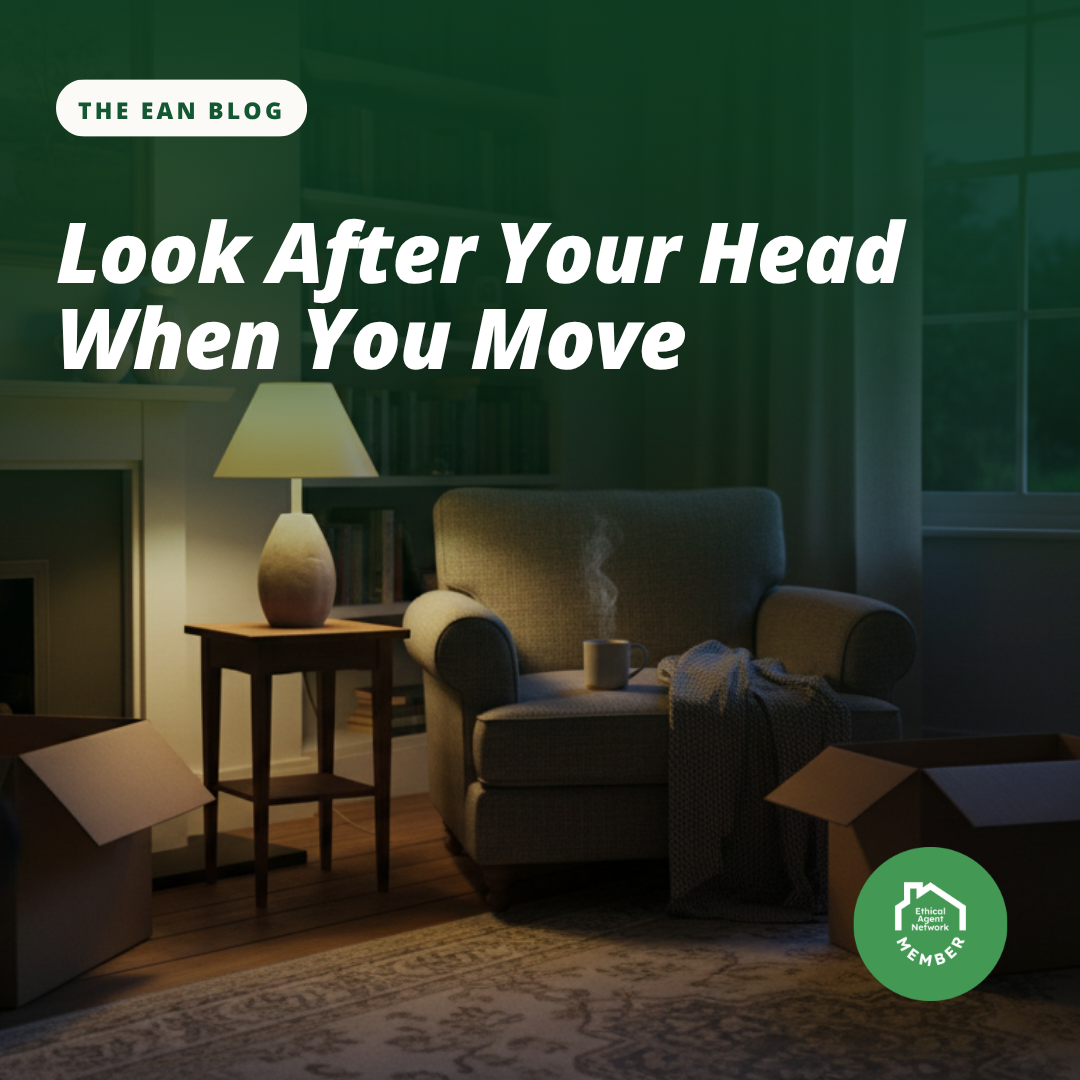
Picture this: it’s 11pm on a Tuesday. You are sitting on the bedroom floor between two half-packed boxes, holding a school photo you forgot existed, and you cannot remember why you ever wanted to move.
If that scene feels familiar, this one’s for you. Saturday 10 October is World Mental Health Day, so this week we are not talking about the market. Just an honest word about what moving does to your head, and what helps.
Why does moving hit so hard?
Because it stacks three heavy loads on you at once.
The decisions. Hundreds of them, from solicitors to sofa dimensions, and decision fatigue is a real thing. By week three, choosing a removal firm can feel as hard as choosing the house did.
The waiting. For chains, for surveys, for someone to ring you back. Not knowing is more tiring than doing, and moving involves a lot of not knowing.
The goodbye. A home holds your history. Leaving one is a loss even when the move is happy and wanted, and it’s allowed to feel that way. Add money stretched further than usual, and it’s no wonder the whole thing can wobble you. None of it means you are doing it wrong. It means you are human.
What actually helps?
- Start earlier than feels necessary, and declutter before you pack. Less to carry, in every sense.
- One room at a time, one decision at a time. Progress you can see calms a busy head.
- Pack a first-night box: kettle, mugs, chargers, bedding, and the good biscuits.
- Protect the boring basics. Sleep, proper meals, a daily walk. Dull advice, works every time.
- Say goodbye properly. Take the photos, walk the empty rooms, and let the kids do the same.
- Accept help. People mean it when they offer, and a second pair of hands halves a hard day.
- Ask your agent and solicitor for a weekly update, so your brain can stop refreshing your inbox.
When does the stress actually peak?
Knowing the wobble points are coming shrinks them, so here they are. The strange lull after your offer is accepted, when it feels like nothing is happening. Survey week, when every creak becomes a catastrophe in your head. The days before exchange, when it is real but not yet certain. And the final packing fortnight, when the house stops being yours one box at a time.
Every one of those is normal, and every one passes. If you know which stage you are in, you can name it, which honestly helps more than it should.
What if it feels like more than moving stress?
Sometimes a big life change surfaces things that were already there. If low mood or anxiety has settled in and isn’t shifting, talk to your GP.
The Samaritans are on 116 123, free, any hour of any day. Mind’s website is full of practical, judgement-free guidance.
And if you need to pause a move, you can. Houses can wait. Health comes first.
What about the kids, and the dog?
Children read a move off the adults around them, so the calmer the house, the calmer the child. Let them pack a box of their own things, let them say goodbye to their room properly, and get their new space set up first so there is one sorted corner from night one.
Pets feel it too. Keep routines as steady as you can, and on moving day itself give the dog or cat one quiet, closed room away from the carrying and the door slamming. A familiar blanket does more than you would think.
Can your agent actually help with any of this?
More than most people expect. We see moving stress every single week, and we have never once thought less of anyone for feeling it. Part of our job is to carry the process so you carry less of it: chasing so you don’t have to, translating solicitor language, telling you honestly where things stand.
So ask us anything, including the question people apologise for most: is this normal? It almost always is.
Frequently asked questions
What is the most stressful part of moving house?
For most people it’s the waiting and the not knowing, especially in a chain. You can’t remove it, but a regular update rhythm from your agent and solicitor shrinks it.
How early should I start packing?
The week you decide to move is not too soon. Declutter first, then pack the rooms you use least, and leave daily life until last.
Who can I talk to if I’m struggling?
Your GP is the right first step for anything that isn’t shifting. The Samaritans are on 116 123, free and available around the clock, and Mind’s website has practical guidance.
If you know someone who would find this useful, please share it with them.
What the EAN logo means for you
We are proud to be part of the Ethical Agent Network (EAN), a national network of independent agents who have been independently checked against strict standards of honesty and service. You cannot pay your way in. It has to be earned, and it can be taken away. That is your reassurance that we do the right thing by you, even when no one is watching. If you would like to know more about the Ethical Agent Network, please get in touch or visit www.ethicalagentnetwork.co.uk.
