
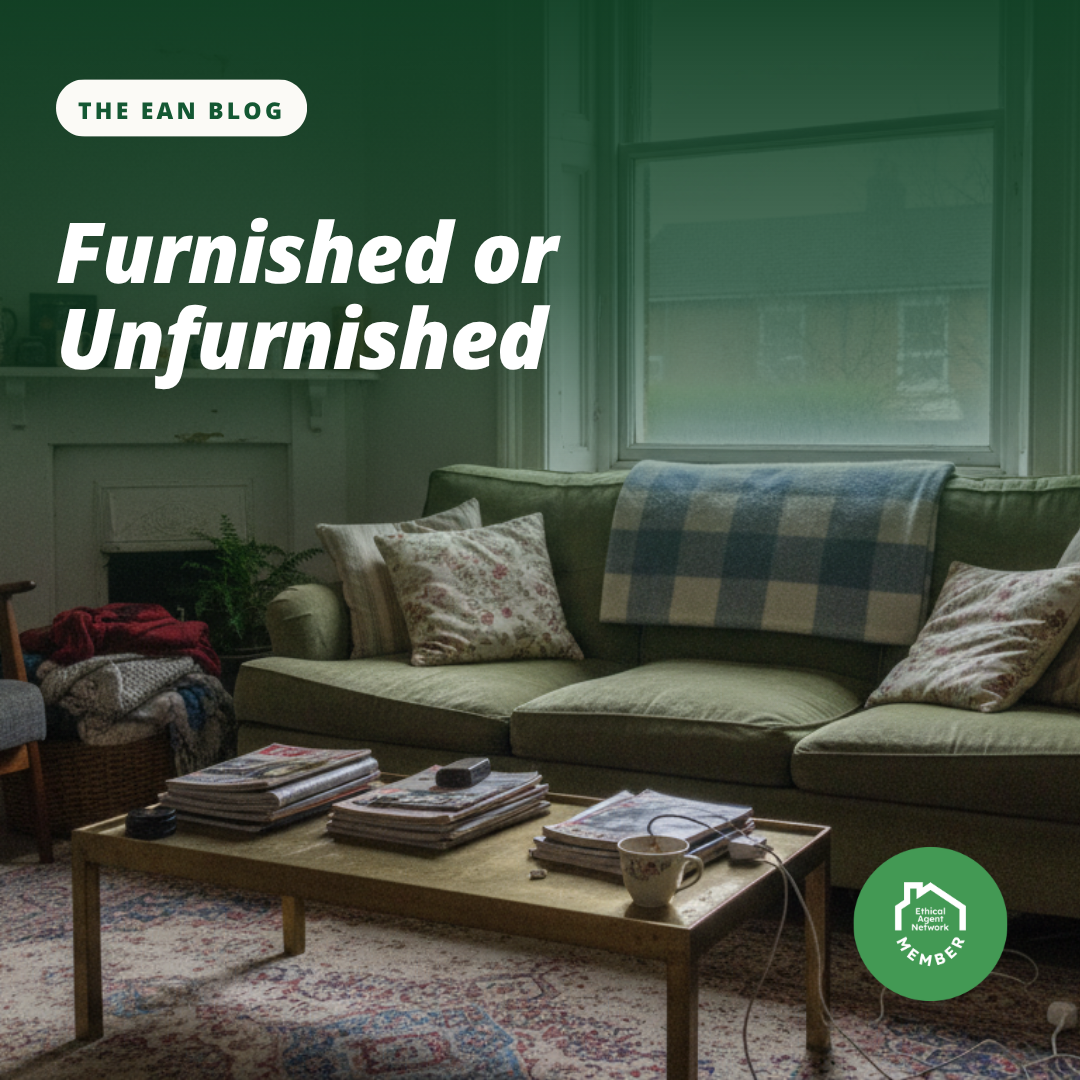
Every autumn a version of the same question lands. The property is empty, the enquiries have thinned out, and someone suggests that furnishing it might get it let faster.
Sometimes that is exactly right. Just as often it is an expensive way of solving the wrong problem.
Does a furnished property really let faster?
It lets faster to a furnished tenant. That is not the same thing.
Furnishing does not widen your market, it moves it. You gain the tenants who cannot or will not bring their own things, and you lose the ones who already own a house full of furniture and have nowhere to put yours. If that second group is who your property naturally attracts, furnishing it will slow you down rather than speed you up.
So the question is never furnished or unfurnished in the abstract. It is who this particular property, on this particular street, at this particular rent, actually appeals to.
Who genuinely wants a furnished home?
- People relocating for work, especially on a contract, who are not shipping a household across the country.
- Younger tenants moving on from a house share or leaving a family home for the first time.
- Tenants arriving from abroad with suitcases rather than a van.
- Anyone in a short term situation. A relationship that has ended, a purchase that fell through, a renovation that overran.
Notice how many of those are time pressured. That is exactly why furnished stock can move quickly in winter, because those situations cluster at this time of year.
Who will walk away from a furnished property?
Families, mostly. And almost anyone who has owned a home before.
A family with their own sofa, their own beds and a kitchen table they like does not want yours, and they are certainly not paying to store theirs. If your property is a three bedroom house with a garden, furnishing it is closing the door on your strongest tenants.
As a rough rule, the smaller and more central the property, the better furnished tends to work. The larger and more suburban, the worse.
What does furnishing actually cost you?
Considerably more than the furniture, and that is the part most landlords underestimate.
- Anything upholstered that you supply has to meet the fire safety regulations. That is a legal duty, not a preference.
- Inventory and check out. A furnished inventory is longer, takes real time to prepare properly, and hands both sides more to disagree about at the end.
- Deposit disputes. Every item you supply is an item that can be damaged, and cleaning and damage are consistently what deposits get argued over.
- Furniture wears out, and it wears out faster in a rental than in your own home. Budget for replacing it, not just for buying it.
- Storage and disposal. If your next tenant wants the place unfurnished, the furniture has to go somewhere, and that costs money too.
What changed about furniture fire labels in 2025?
This one is worth knowing, because a great deal of the landlord advice online is still describing the old system.
The Furniture and Furnishings (Fire) (Safety) Regulations 1988 still apply to upholstered furniture you supply in a letting. What changed is the labelling. The Furniture and Furnishings (Fire) (Safety) (Amendment) Regulations 2025 came into force on 30 October 2025 and removed the display label requirement, the swing tag that used to hang off new furniture in a showroom. The permanent label attached to the item now carries the compliance information on its own.
The same amendment took a list of baby and young children’s products out of scope altogether, including cots, cribs, prams and pushchairs, and doubled the window for Trading Standards to bring a prosecution from six months to twelve.
The practical point for a landlord is straightforward. Do not go hunting for a swing tag on new furniture and panic when there is not one. Check the permanent label, and keep your own record of what you supplied and when you bought it.
Is part furnished the sensible middle ground?
Often, yes, provided everybody knows what it means.
Part furnished has no legal definition, which is precisely why it causes arguments. If you advertise part furnished, list the actual items in the advert and again in the inventory. White goods, curtains, blinds, carpets and light fittings, plus anything else that is staying.
A cooker, a fridge freezer, a washing machine, flooring and window coverings will suit far more tenants than a full set of bedroom furniture, and will cost you a great deal less to maintain.
So what should you actually do?
Look at what let last, and to whom. If your last three tenancies were families, furnishing the place now is solving a problem you do not have. If it is a one bedroom flat near a station and your enquiries are all relocations, furnishing it might be the best money you spend this year.
If you are genuinely unsure, ask whoever handles your enquiries. They know who has been ringing.
Frequently asked questions
Can I charge more rent for a furnished property?
Usually a little, but rarely enough to cover the furniture, the replacement cycle and the extra work in the first year alone. Treat furnishing as a way of reaching a different tenant, not as a way of raising the rent.
Does furniture I supply have to meet fire safety rules?
Yes. Upholstered furniture you provide in a letting has to comply with the Furniture and Furnishings (Fire) (Safety) Regulations. The permanent label is what evidences that, and since the 2025 amendment came into force the separate display tag is no longer required.
What if the tenant asks me to take the furniture out?
That is a conversation worth having rather than refusing outright, but agree in writing who moves it, who stores it and who pays. Then update the inventory so the check out reflects what is actually there.
If you know a landlord weighing this up before the winter, please pass it on.
About the Ethical Agent Network
We are members of the Ethical Agent Network (EAN). Membership cannot be bought. Every agent has to pass an independent assessment on honesty, service and the way they treat people. So when you see the EAN logo on an agent’s window or website, it is a signal you can trust before you have even walked through the door. To find out more, please get in touch or visit www.ethicalagentnetwork.co.uk.
Sources: The Furniture and Furnishings (Fire) (Safety) Regulations 1988; The Furniture and Furnishings (Fire) (Safety) (Amendment) Regulations 2025 (SI 2025/531), made 28 April 2025, in force 30 October 2025, legislation.gov.uk. Checked and verified in force 9 September 2026.
